The Izmir issue
Three Days in Izmir Without a Car
A tested three-day route through Izmir on foot, by public ferry and on the tram, with opening hours, real prices and the bookings you have to make before you fly.
By Joris van der Veldeİzmir on foot and by ferry
Izmir runs public ferries across its own harbour the way other cities run buses, and once you accept that the bay is the middle of the city rather than its edge, a car stops being useful and turns into luggage. The oldest quarter has been shut to motor traffic since 2018, the museums that matter sit on the tram line, and the best free view in town sits at the top of a lift built in 1907. Three days here need no hire desk and no parking, just a transit card and reasonable shoes.
Day one goes into a bazaar you cannot drive into
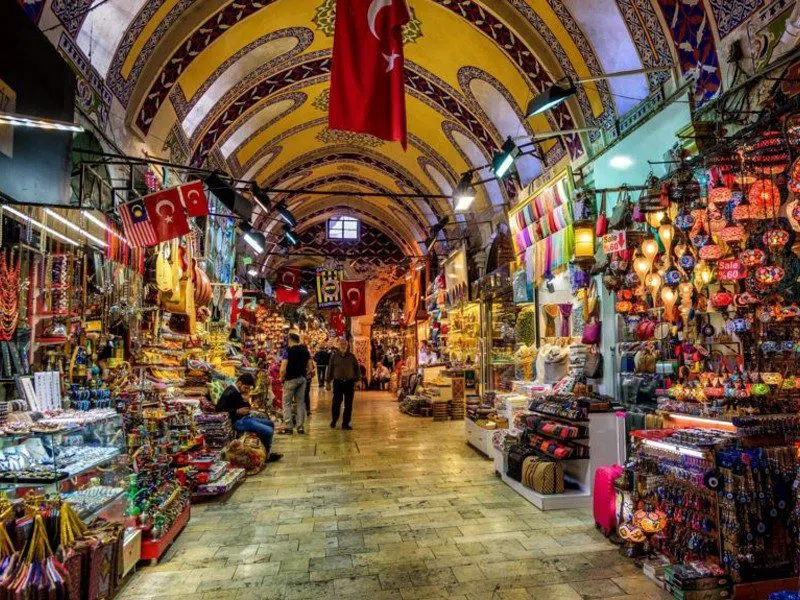
Kemeraltı Bazaar (Konak, immediately inland from the ferry pier and the tram stop) is the anchor of any car-free trip, and not by accident. It has been trading for roughly 2,400 years, it sits on UNESCO's tentative list as part of "The Historical Port City of İzmir", and it has been closed to motor vehicles since 2018. The ban is physical rather than theoretical. You could not drive in if you wanted to, which is why walking it feels nothing like walking a main road with the traffic turned off.
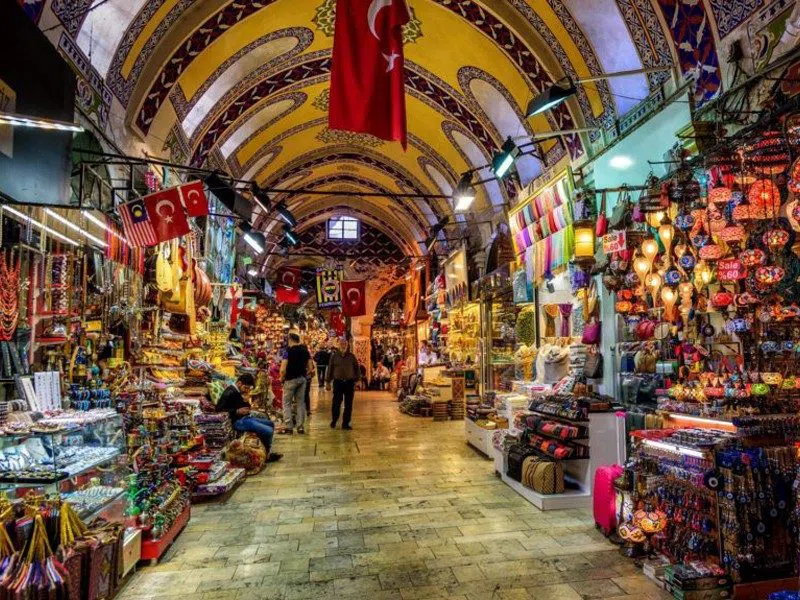
Go in from the Konak end mid-morning and give it three hours. Navigate by trade rather than by street name, because the street names will not help you: coppersmiths beating trays, then fabric and haberdashery, then the dried fruit and spice runs, then the coffee grinders. Walking costs nothing; tea in a courtyard is 30-60 TL and a sit-down lunch 200-400 TL. It is an open public market, so there is no door policy and no group limit, and guided walking parties come through all day with shopkeepers entirely used to them. Haggling is expected on textiles and copper, not on food.
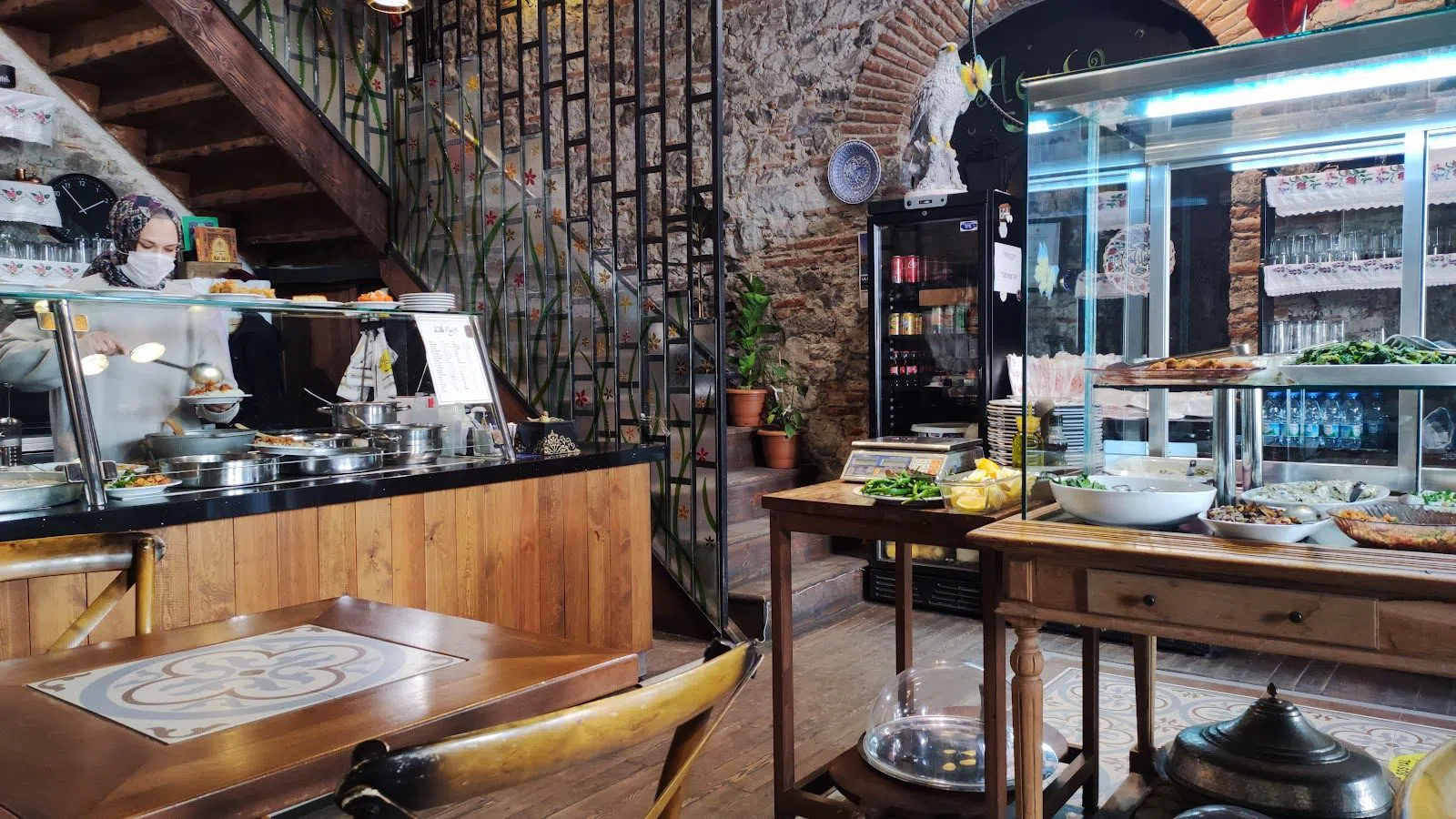
Eat at Ayşa Boşnak Börekçisi (a han courtyard in the middle of the bazaar, with a second branch on 1437 Sokak in Alsancak). Bosnian börek, dumplings, olive-oil mezze and Begova soup, and a Bib Gourmand in the 2026 MICHELIN Guide Türkiye. A full plate runs 150-350 TL, which makes it the best-value stop of the whole trip. The caveat is the size of the rooms. Four or five people are fine; anything approaching a coach party is not, and the Alsancak branch has a little more space if you are a bigger group.
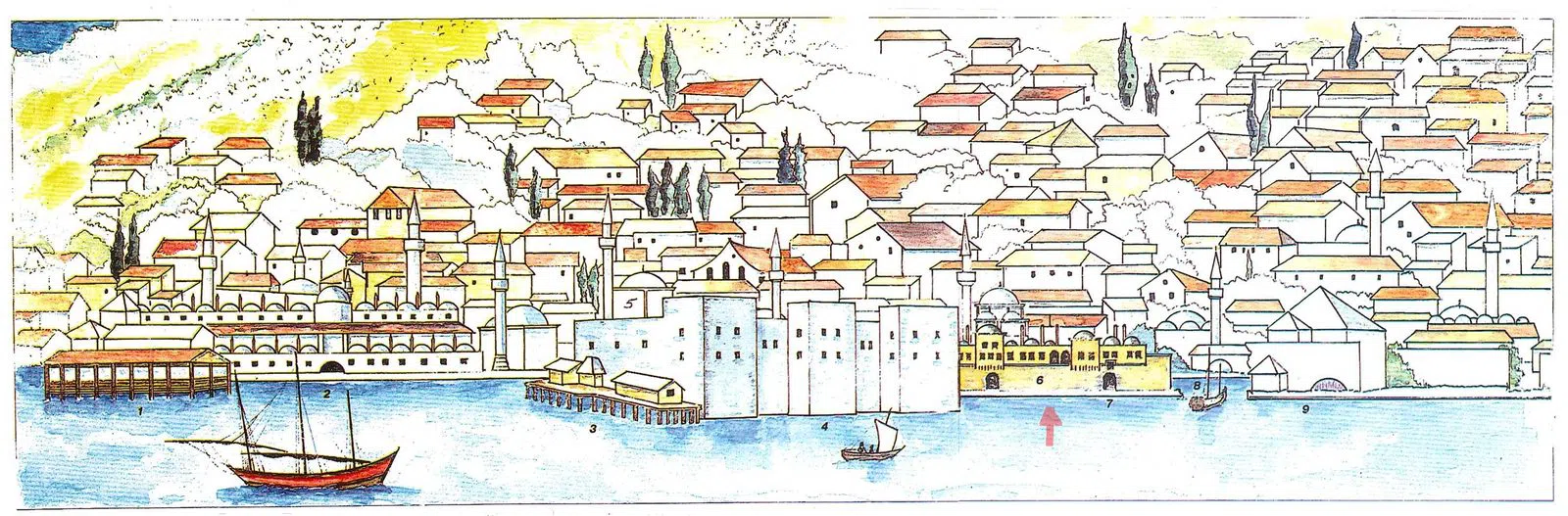
In the late afternoon, walk to Kızlarağası Hanı (Kemeraltı, a few minutes from the Hisar Mosque end). The caravanserai was built in 1744 and reopened as a bazaar after the 1988-92 restoration, and its courtyard is the one place inside Kemeraltı where a group of any size can sit down together without a reservation. Turkish coffee is 40-80 TL. Come between about four and six, when the light drops into the arcades and the whole courtyard goes gold; earlier in the day it is a shopping arcade with a café in the middle.
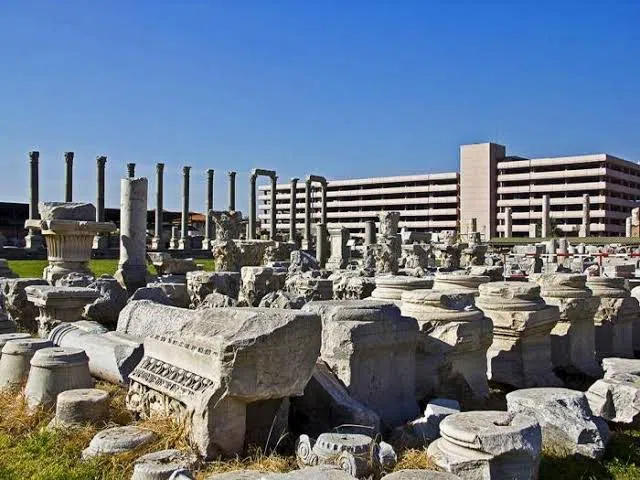
Finish the day five minutes' walk out of the bazaar at the Agora of Smyrna Open Air Museum (Namazgâh). It opens 08:30-18:00 from April to October and 08:30-17:00 in winter, costs around €6, and the Museum Pass Türkiye is valid. Be realistic about it: this is forty-five minutes, not a half-day. It is still the only place in the centre where the ancient city is legible at ground level, and the vaulted basilica basement carries Roman graffiti scratched into the plaster. The site is open-air and absorbs guided groups without any fuss.
Plan your Izmir trip
Live prices from our booking partners.
Free cancellation on many rooms. We may earn a commission when you book.
The synagogues have to be arranged before you fly
Off Havra Sokağı and the Kemeraltı Synagogues (the old Juderia, running north out of the bazaar) sit nine surviving synagogues, among them Bikur Holim, Signora, Etz Hayim, Shalom and the Hevra/Forasteros complex, several of them restored under the EU-backed "Sustaining Jewish Heritage" project. It is one of the densest surviving concentrations of its kind anywhere, and it is not a walk-in. Visits are small groups only and must be arranged in advance through the İzmir Jewish Community at izmirjcc.org/contact; passport details are usually requested and a donation is expected. These are working religious buildings, not a museum campus.
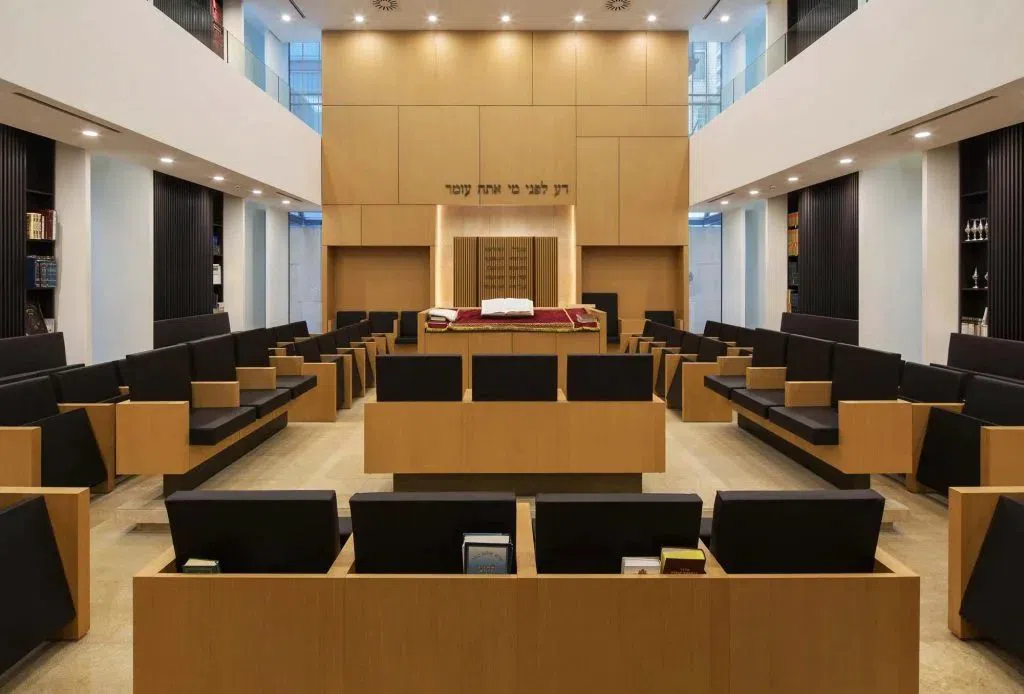
So email before you book flights, not the night before. If you leave it, you will get the exteriors and the doors, plus Havra Street itself, which is a fish, cheese and pickle market of real quality and worth the walk regardless. It is not the same visit, and no amount of turning up politely will change that.
Day two belongs to the water
İZDENİZ Bay Ferries (piers at Konak, Pasaport and Alsancak on the south shore) are the İzmir Metropolitan Municipality's ferry arm, running to Karşıyaka, Bostanlı, Göztepe, Üçkuyular, Güzelbahçe, Urla and Mordoğan. Konak-Karşıyaka goes roughly every fifteen minutes at peak and takes fifteen to twenty. You pay the standard İzmirim Kart transit fare, a few lira, which makes it the cheapest harbour cruise in the Mediterranean and the fastest way across a city built around a bay. No booking, no group limit, and under the 2026 summer schedule bicycles ride free. Sit outside at the stern.
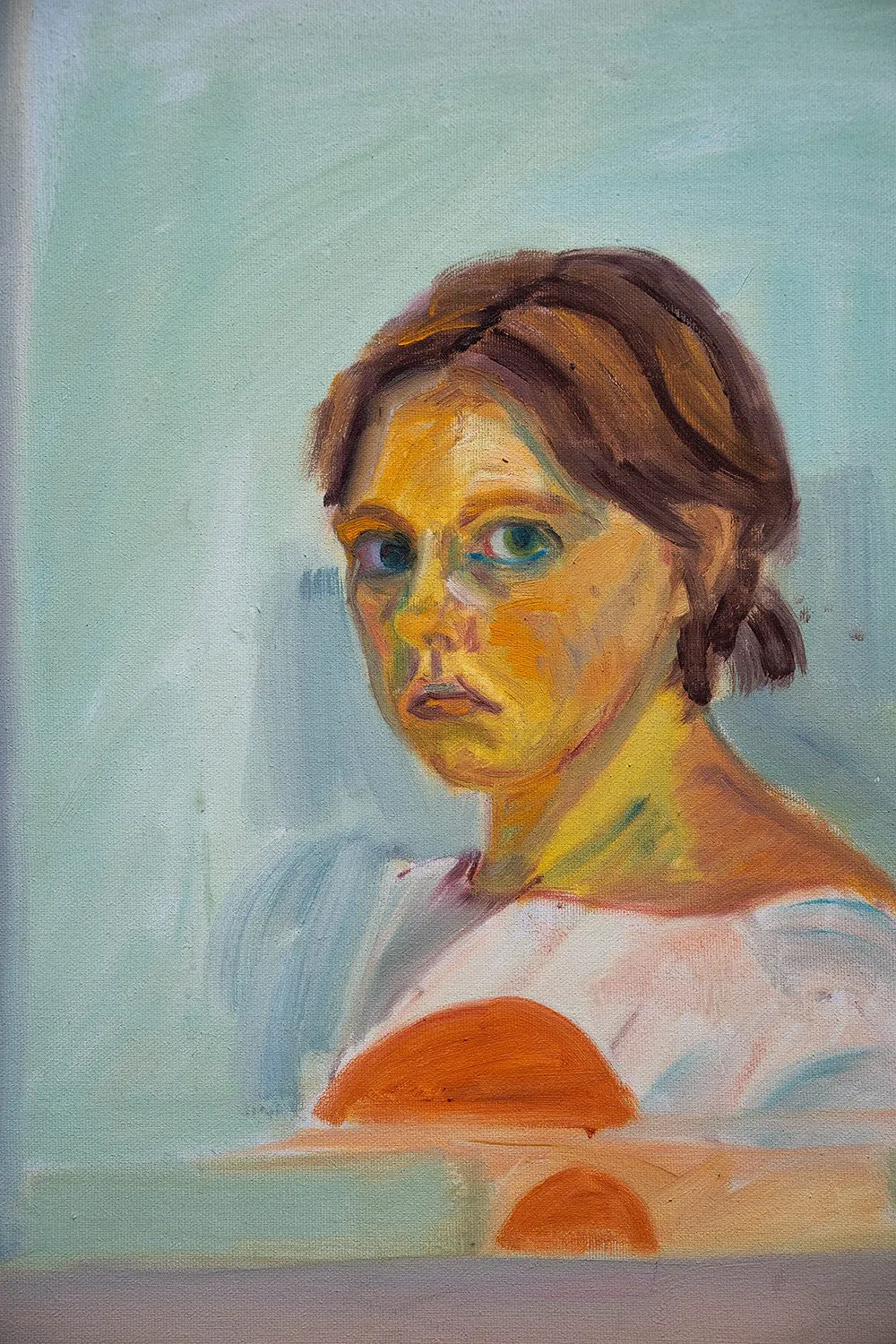
Start the day at Arkas Sanat Alsancak (Alsancak, a short walk up from the Pasaport pier). It is free, open every day except Monday from 10:00 to 18:00 and until 20:00 on Thursdays, and it is the flagship of seven Arkas venues, showing rotating loans from the Arkas Collection. An hour is right. The rooms are domestic in scale (it is a converted house, not a hall), so small groups are fine but larger parties should email ahead rather than arrive as a block.
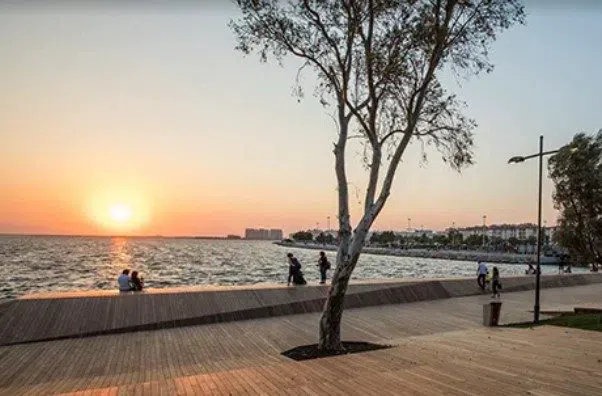
Spend the afternoon on the water and time your last crossing for the light. Take the ferry to Bostanlı and walk a few minutes along the shore to the Bostanlı Sunset Lounge (Bostanlı, Karşıyaka), Studio Evren Başbuğ's 2016 deck for the İzmirdeniz coastal project. It is free, open at all hours, has no booking and no bouncer, and it sits on one of the few stretches of that shoreline facing directly west. People sprawl across the timber and stay put. You arrive by boat and leave when the sun has gone; the return crossing in the dark, with the city lit along both shores, is the better half of the trip.
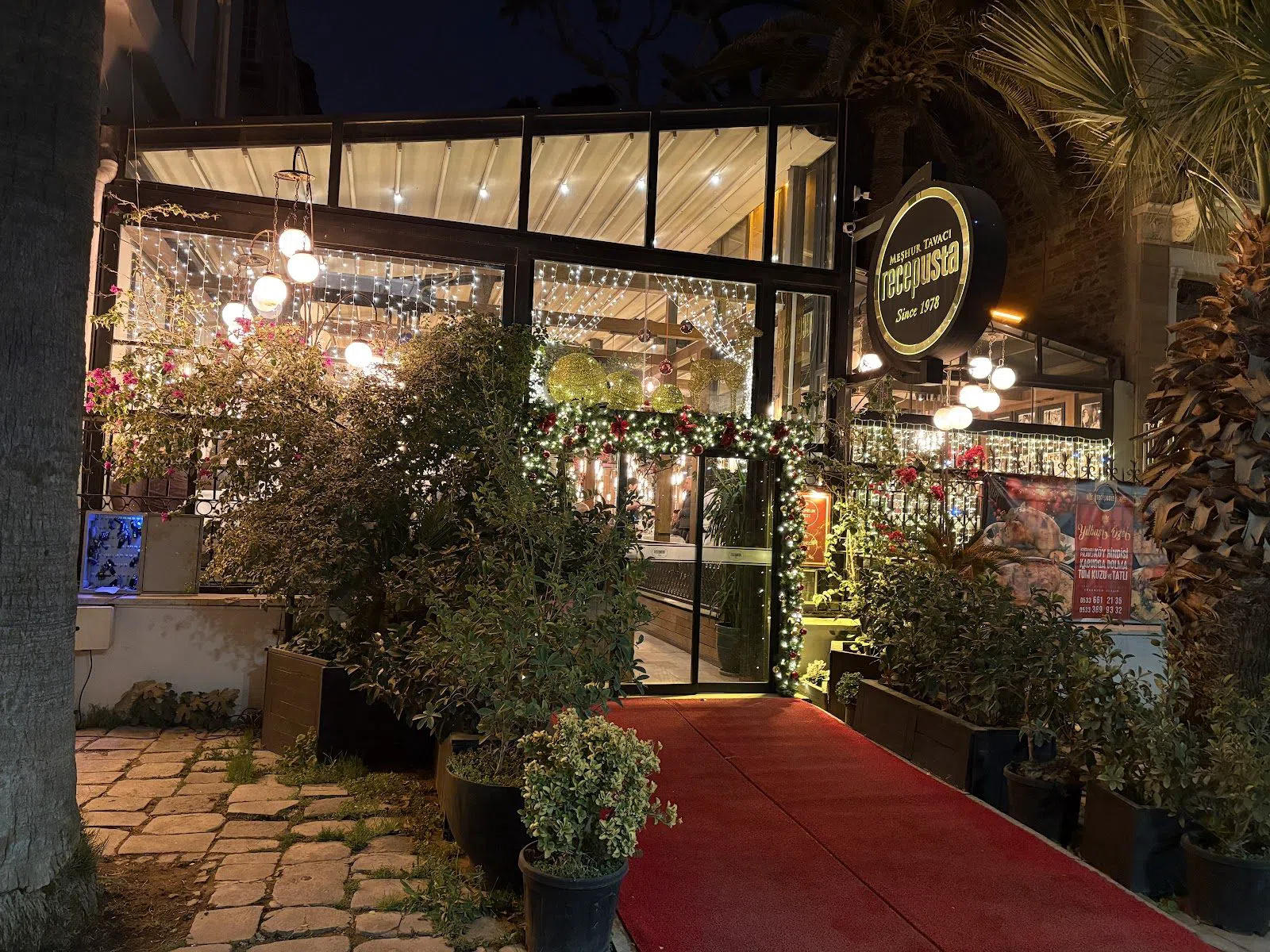
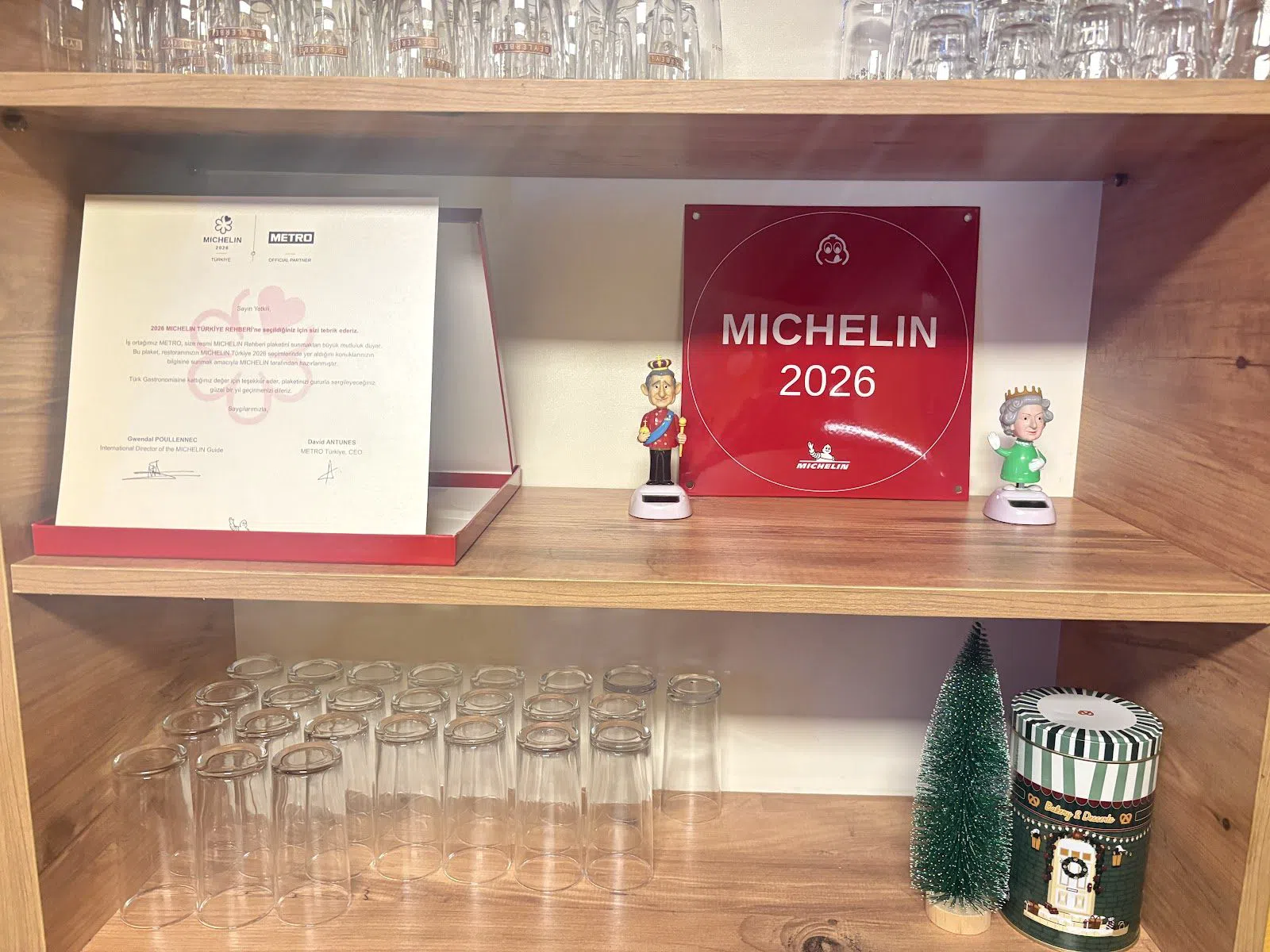
For dinner you have two good options and they suit different tables. Kemal'in Yeri Mülkiyeliler Birliği (Alsancak) holds a Bib Gourmand in the 2026 guide; Kemal Özçakar drives out to regional farms every morning for the produce, and it is one of very few Michelin-listed Izmir kitchens actually inside the walkable city rather than out in the wine country. Reckon on 900-1,600 TL a head with rakı. It is a long-table meyhane full of locals every night, which means it works well for a group but you must book. The alternative is Tavacı Recep Usta (Atatürk Caddesi No:364, Alsancak), open 11:30-23:30 daily, also Bib Gourmand-listed, doing Southeastern grill cooking (slow-braised tava, kaburga) at 700-1,200 TL a head. It is high-capacity and sits directly on the Kordon waterfront walk, which makes it the most group-friendly Michelin-listed table in the centre; reserve for six or more.
An evening lift and a museum that moved
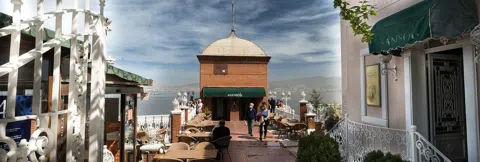
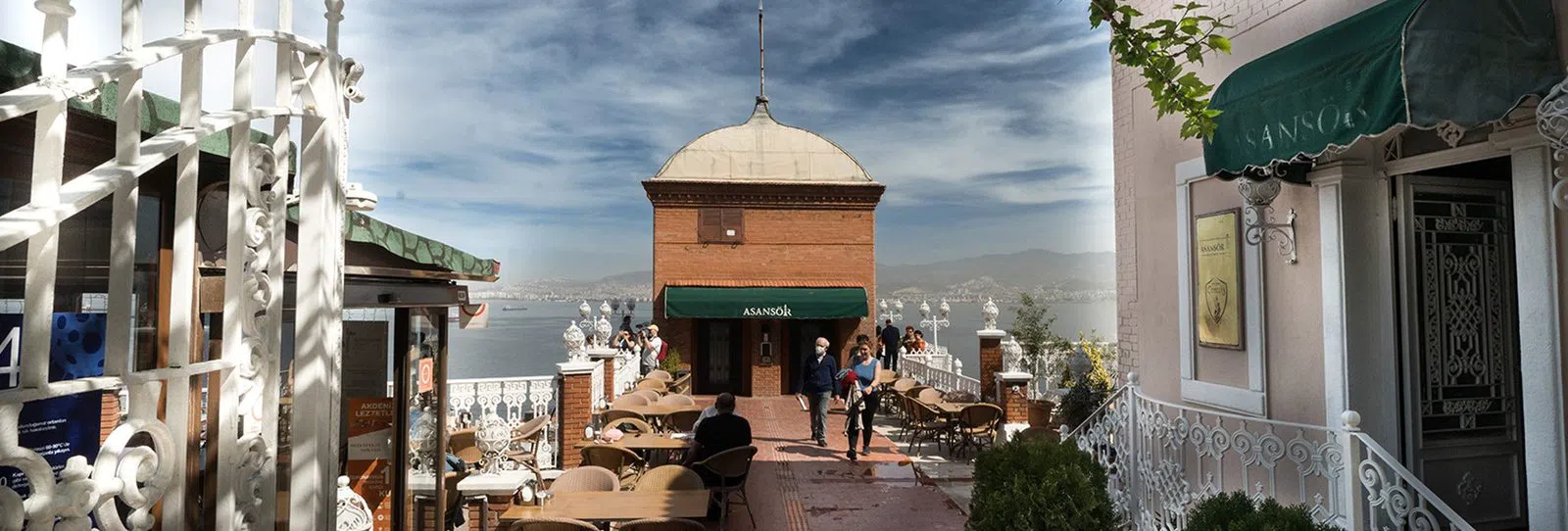
Slot Tarihi Asansör (Karataş, on the coastal walk south of Konak) into either evening. The banker Nesim Levi Bayraklıoğlu built the Historical Elevator in 1907 so that Karataş residents could reach the hilltop without the stairs, the city's original car-free infrastructure and still the best free view it has. Riding the lift costs nothing and is unrestricted. At the top, Teras Kafe seats 80 and runs 09:00-24:00 with coffee at 60-120 TL, and you can simply turn up. Asansör Restoran seats 110, runs 19:00-24:00, costs 700-1,400 TL a head and requires a reservation. If you only want the view, take the lift, have a coffee on the terrace, and walk back down through the Karataş streets.
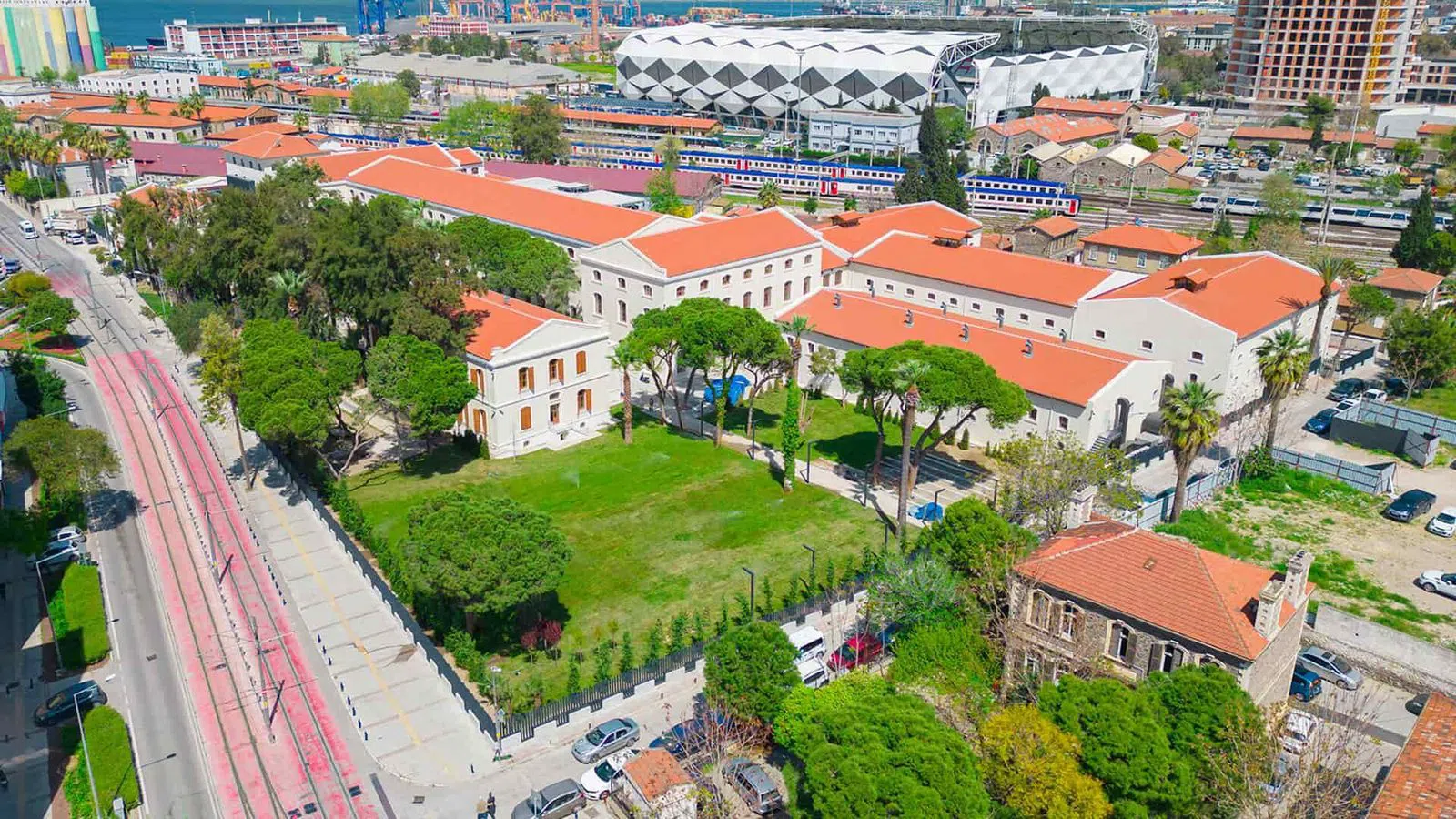
If the weather turns, go to the İzmir Culture and Arts Factory (Ziya Gökalp Bulvarı No:36, Konak). Museums open 09:00-21:00 every day and the grounds stay open until 23:00; entry is 200 TL, free on Tuesdays, and free for art history, archaeology and museology students. It is ticketed but high-capacity, so groups are no problem. One correction worth carrying with you: it absorbed the collections of the old İzmir History and Art Museum in Kültürpark, which is permanently closed. Older listings and map pins still send people to the Kültürpark address, where they find nothing.
Day three climbs, or leaves town
The short version of day three is uphill. İzmir Teleferik (Balçova, on the tram and bus network) is run by the municipal operator İZULAŞ and lifts you to 418 m in four minutes for 40 TL, with under-fives free. It closes on Mondays; summer running hours go to about 20:00 but ticket sales stop around 18:00, so check before making a late plan for sunset. Gondolas hold eight, so a group splits across cabins, and there is often a queue in the last hour of light. There is no reservation system, and you queue like everyone else.
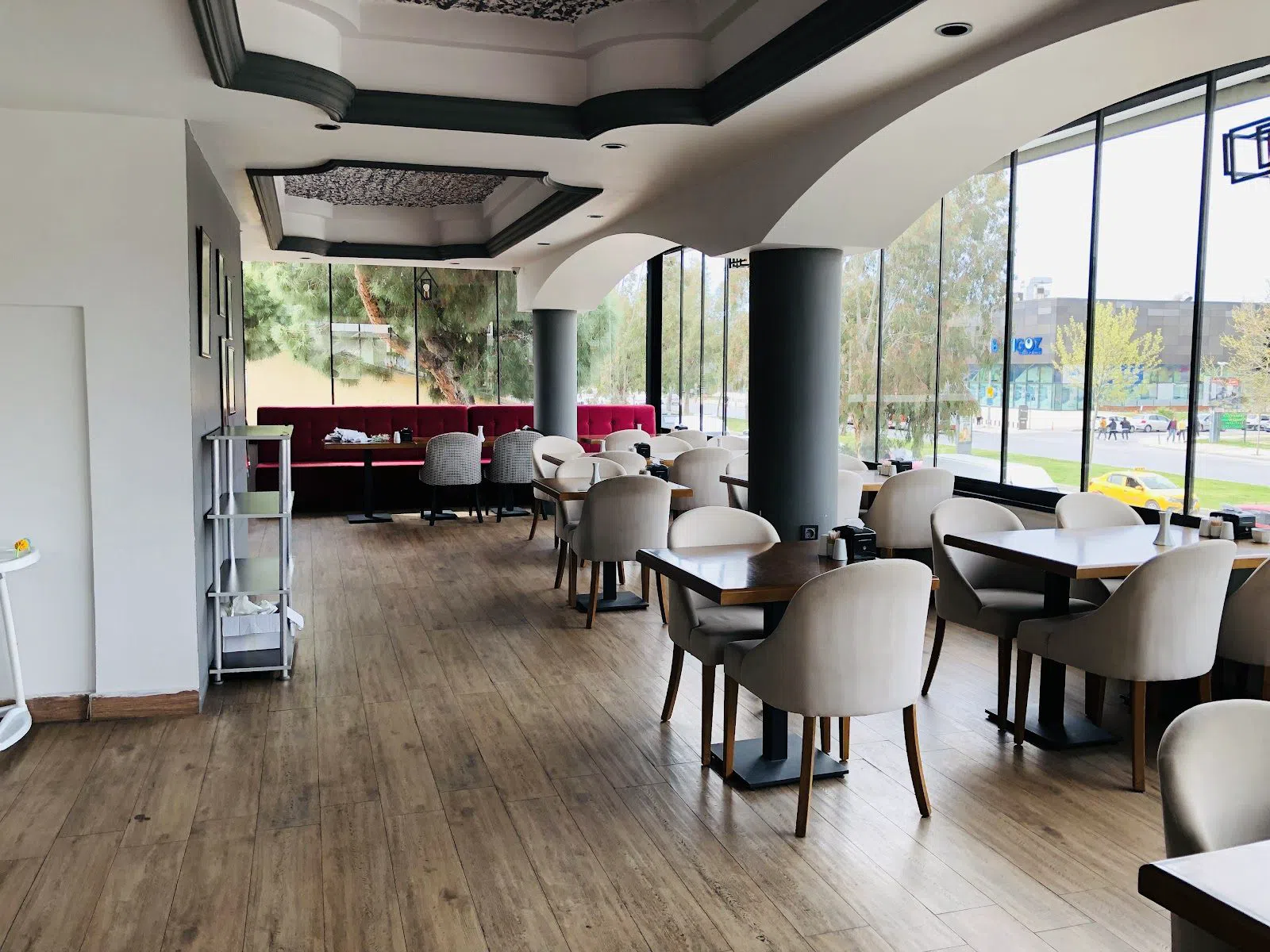
Eat afterwards at Adil Müftüoğlu (Uğur Lokantası) (Korutürk, Mithatpaşa Cd. No:159, Balçova). Founded in 1955 as Uğur Lokantası, now third-generation, stone-oven esnaf cooking, Bib Gourmand in the 2026 guide, and 250-450 TL a head. It is a counter-service canteen: you queue, point at what you want and sit down. Groups are fine but there is no booking and no ceremony. It sits on the coastal tram and bus corridor a short hop from the cable car, so the two make one clean car-free afternoon.
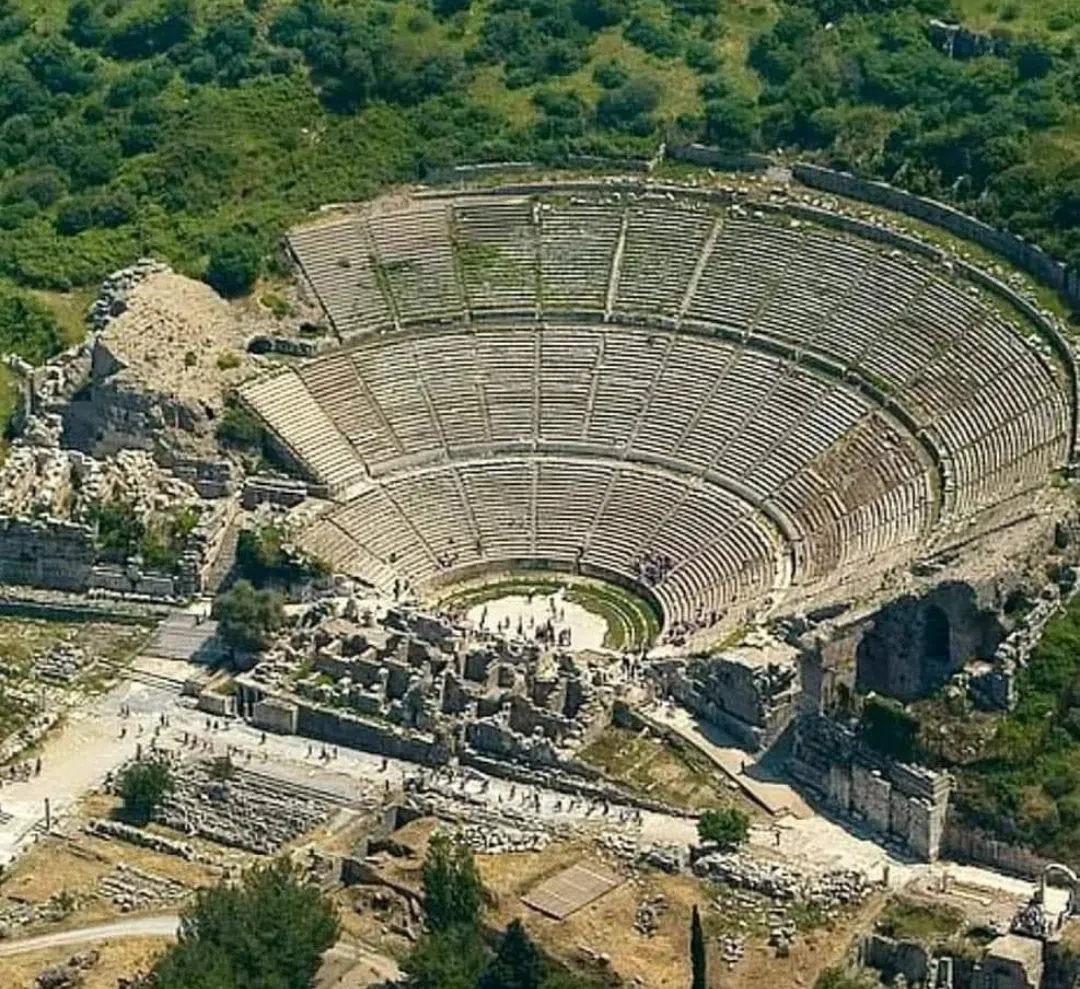
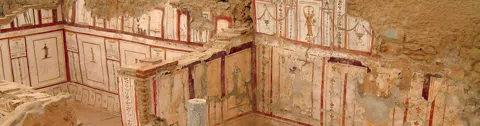
The longer version of day three replaces all of that. Ephesus Ancient City (Efes Ören Yeri) is the one big day trip that genuinely works without a car. The regional train from Basmane reaches the Selçuk stop in about eighty minutes, or you can take İZBAN south with a change at Tepeköy and cover the last 3 km by minibus. The site opens 08:00-18:00 with last tickets at 17:30; entry is €40, the Terrace Houses a further €10-15, and the Museum Pass Türkiye is valid. Pay the extra: the Terrace House mosaics and wall paintings are the best-preserved Roman domestic interiors in the country and the main reason to go. Take the earliest train you can stand, because the cruise coaches land mid-morning and the Library of Celsus becomes a queue. Licensed guides meet groups at the gate, and walk-in capacity is effectively unlimited. Be honest with yourself about the trade: this eats the entire day, you will be back in the city after dark, and it means skipping the cable car.
Where to stay
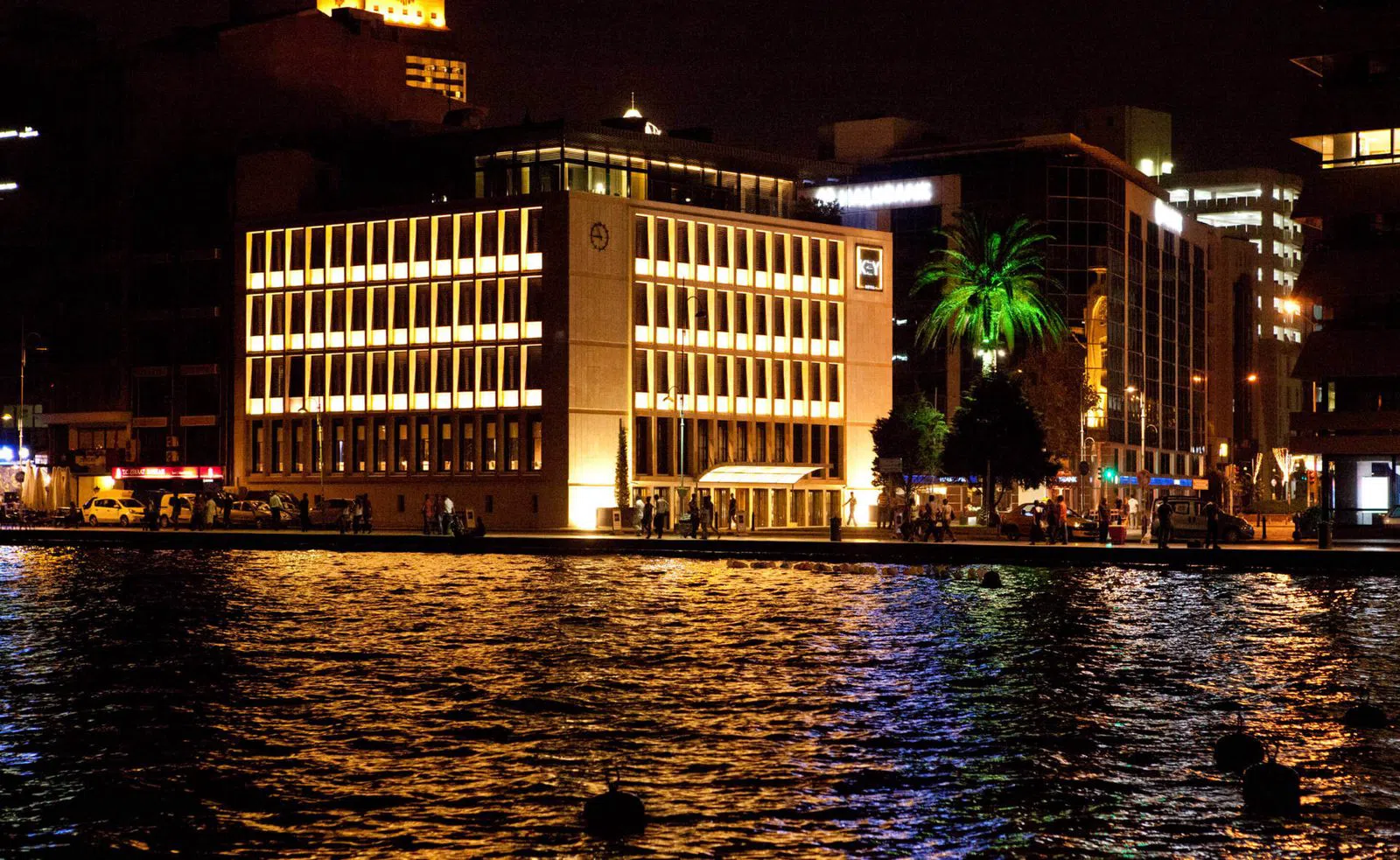
If you are not driving, base yourself between the ferry piers and the tram. Key Hotel (Akdeniz Mah., Atatürk Cd. No:36, Konak) sits on the waterfront between Konak and Alsancak, minutes from the Konak pier, the tram and the bazaar, at roughly €130-220 a night. It has 31 rooms, which is the relevant number: it suits couples and small parties rather than a large group, its restaurant and bar take outside bookings, and it sells out, so book early. For everything else in the same walkable band, run an Izmir hotel search, and check the wider Izmir guide for what sits beyond these three days.
Getting around, paying and timing
Buy an İzmirim Kart at any metro or ferry kiosk on arrival and load it once. The same card covers the metro, the tram, the İZBAN commuter rail, the buses and the ferries, and the ferry fare is a few lira per crossing. You do not need to plan routes tightly; the network is dense enough that you can walk until you are tired, then take whatever is nearest.
Carry cash. The bazaar, the ferry kiosks, the counter-service canteens and the small börek rooms are all easier with notes, while the Michelin-listed restaurants, the museums and the hotel take cards without drama. Rough daily budget per person, excluding the room and excluding the Ephesus day: around 900-1,400 TL if you eat cheap at lunch and mid-range at dinner, plus 200 TL for the arts campus and 40 TL for the cable car.
Watch two days of the week. Mondays close both Arkas Sanat and the cable car, so make Monday your bazaar-and-Agora day. Tuesdays are free at the Culture and Arts Factory. Book Kemal'in Yeri and the Asansör restaurant a few days out, book the synagogues weeks out, and leave everything else to the day itself. None of the rest needs a reservation, and the ferry timetable is frequent enough that you never really need to plan around it.
Before you go
Do you need a car for three days in Izmir?
No, and it works against you. Kemeraltı Bazaar has been closed to motor vehicles since 2018, the İZDENİZ ferries cross the bay every fifteen minutes at peak for a few lira on an İzmirim Kart, and the Agora, the arts campus, the Historical Elevator and the Balçova cable car all sit on the tram, metro or bus network. Even Ephesus is reachable by regional train from Basmane in about eighty minutes.
Where should I stay if I'm relying on public transport?
The strip between Konak and Alsancak, on the waterfront. Key Hotel (Atatürk Cd. No:36, Konak) is one example: 31 rooms at roughly €130 to €220 a night, minutes from the Konak ferry pier, the tram and the bazaar. It is small enough to sell out, so book early, and it suits couples and small parties rather than large groups.
Can I visit the Kemeraltı synagogues without booking?
No. Visits to the nine surviving synagogues in the Juderia are small groups only and must be arranged in advance through the İzmir Jewish Community at izmirjcc.org/contact, with passport details usually requested and a donation expected. These are working religious buildings. Without an arrangement you will see only the exteriors and Havra Street's food market.
Is Ephesus doable as a day trip without a car?
Yes. Take the regional train from Basmane to the Selçuk stop, about eighty minutes, or İZBAN south with a change at Tepeköy and 3 km on by minibus. The site opens 08:00 to 18:00, last tickets 17:30; entry is €40 with the Terrace Houses a further €10 to €15, and the Museum Pass Türkiye is valid. Go early (the cruise coaches arrive mid-morning) and accept that it takes the whole day.
Which days should I avoid for museums and the cable car?
Mondays. Arkas Sanat Alsancak is closed on Mondays and the İzmir Teleferik does not run, so use Monday for Kemeraltı, Kızlarağası Hanı and the Agora, all of which are open. The İzmir Culture and Arts Factory opens 09:00 to 21:00 every day and is free on Tuesdays, which is the cheapest day to fit it in.